How AI investigation works under the hood
A look at the pipeline of agents that correlate a ticket against your docs, API references, and codebase.
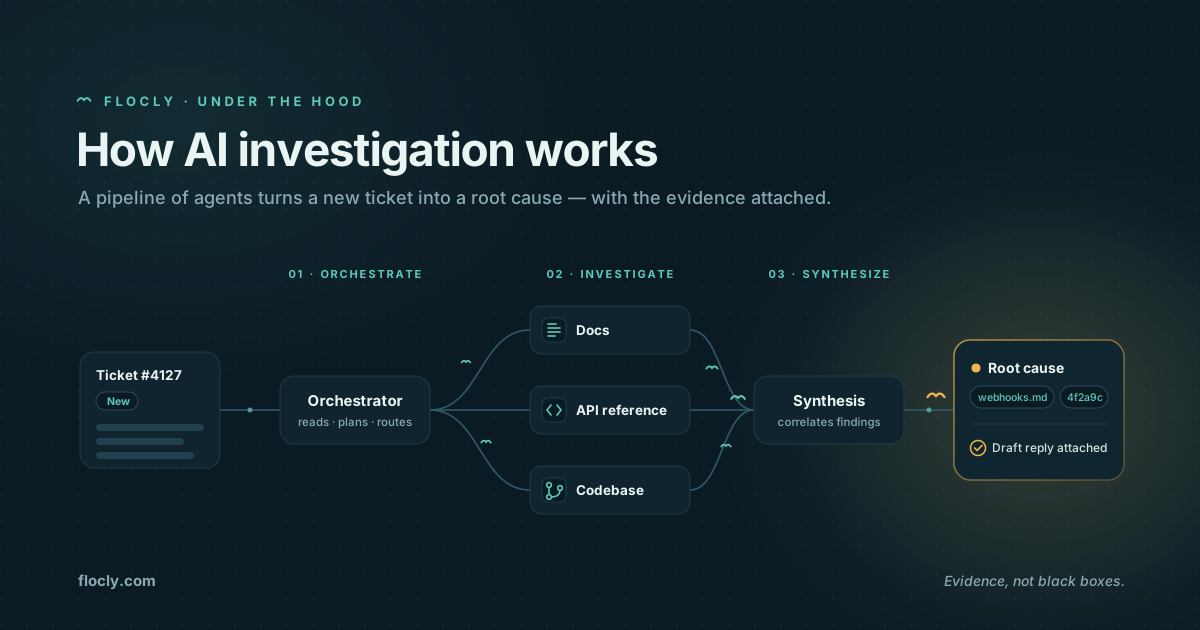
When a ticket arrives, Flocly doesn't run a single prompt over it. It runs a small pipeline of agents, each with a job.
The pipeline
- Orchestrator. Reads the ticket, extracts a compact problem statement, and decides which sources are worth investigating.
- Specialists. A fan-out of agents each dig into one source — the docs, the API reference, the codebase — and report what they found.
- Synthesis. A final step correlates the specialists' findings into a single root cause with supporting evidence, and drafts a suggested reply.
Because the shared ticket context is fed to every agent, how we handle that context is the biggest lever on both cost and quality.
Evidence, not black boxes
Every conclusion Flocly reaches is attached to the ticket alongside the evidence it came from — the doc section, the API endpoint, the commit. Your agents can see why Flocly thinks what it thinks, and disagree when they need to.
That transparency is the point. A suggested reply you can't audit is just a guess with better grammar.