Investigation and memory: two features that compound
Flocly investigates every new ticket, and remembers every resolved one. On their own each is useful. Together they're a flywheel - every hard ticket you solve makes the next one cheaper.
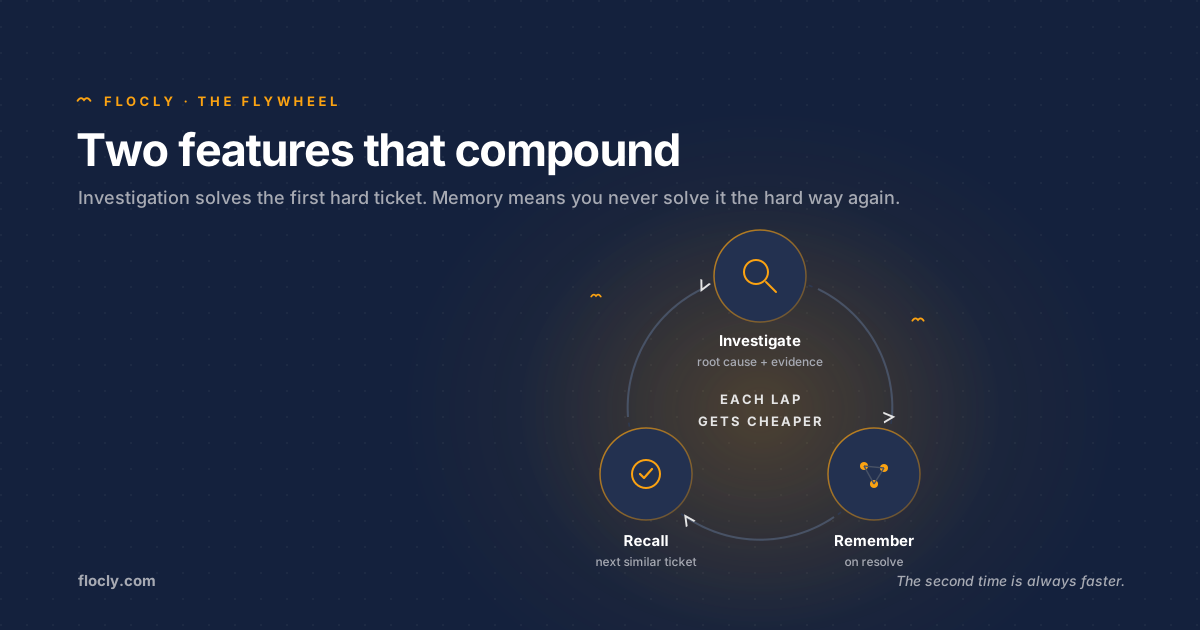
Most support tools add features that sit side by side. Flocly has two that multiply.
The first is investigation: the moment a ticket arrives, Flocly digs through your docs, your API references, and your codebase and proposes a root cause with the evidence behind it. Your agents start from "do I agree with this?" instead of "where do I even begin?"
The second is memory: when a ticket is resolved, Flocly distils what was learned into your organisation's memory, so the next ticket like it surfaces the prior resolution automatically.
Each is useful alone. The interesting part is what happens when you put them in a loop.
The flywheel
Picture a genuinely hard ticket - the kind that takes a senior engineer half a day.
- Investigate. Flocly does the legwork up front: correlates the ticket against every connected source and lands on a root cause with citations. The half-day of digging becomes a review.
- Remember. Your agent confirms the fix and resolves the ticket. That resolution - problem, cause, and the evidence - goes into memory as a reusable lesson.
- Recall. Three weeks later a different customer hits the same underlying issue. Before anyone starts digging, memory surfaces the earlier resolution, and the investigation starts from "we've seen this" rather than a blank page.
That second ticket didn't cost half a day. It cost minutes. Each lap around the loop makes the next one cheaper - investigation feeds memory, memory sharpens the next investigation, and the whole thing tightens with every ticket you close.
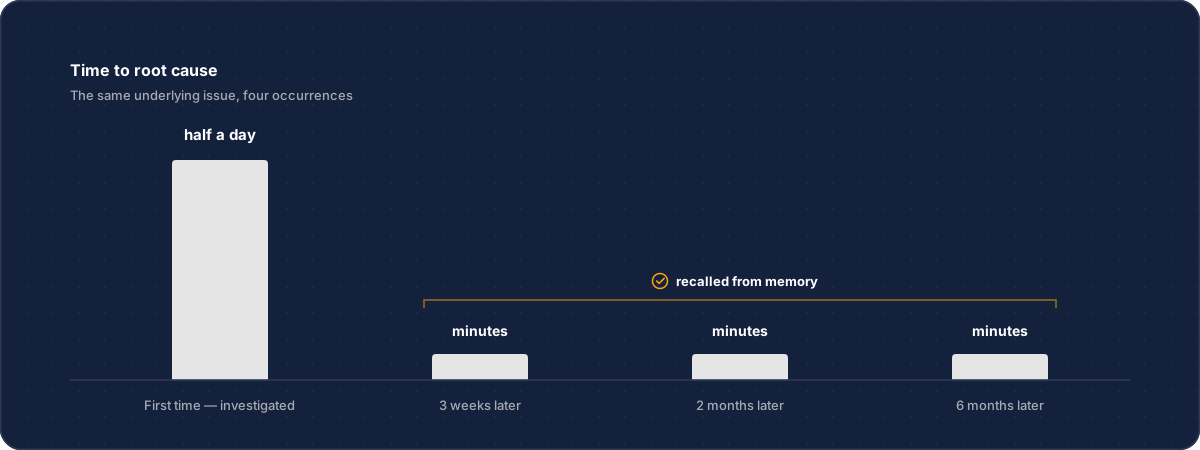
Investigation solves the problem once. Memory makes sure "once" is all it costs.
Why neither half is enough on its own
- Investigation without memory re-does work. It's fast, but it re-derives the same root cause every time the same issue recurs - brilliant amnesia.
- Memory without investigation has nothing good to remember. Feed a knowledge system raw ticket threads and you get noise. Feed it evidence-backed resolutions and you get a compounding asset. Investigation is what makes memory's lessons worth keeping.
Together, they turn your support history from an archive into an asset. The team that's been running Flocly for a year isn't just faster because the AI got better - it's faster because their own hardest-won answers are now one recall away.
Auditable at every step
The loop never becomes a black box. Every investigation shows the evidence it reasoned from; every recalled answer links back to the resolved ticket it learned from. Your team can follow the chain from this ticket to the one it reminds Flocly of, back to the docs and commits behind the original fix - and step in wherever they disagree.
That's the whole design: the AI keeps the receipts, and your team spends its judgement on the problems that are actually new.
Investigation ships on every plan; memory is available on Pro and Growth. See how they work together.