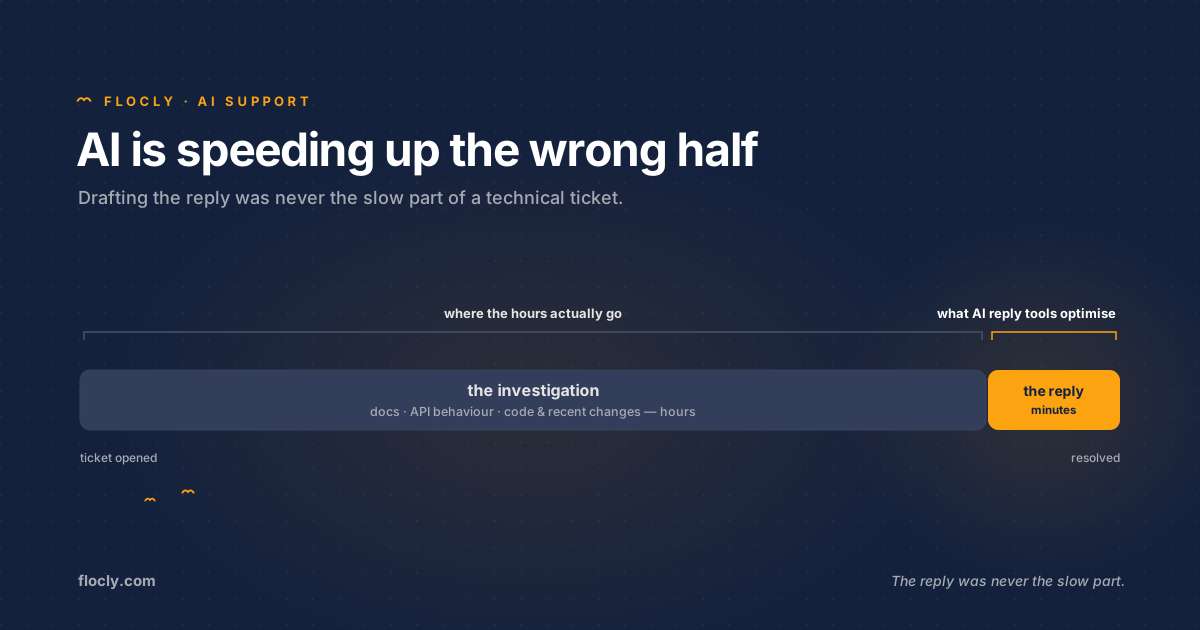
AI support tools make replies faster. Technical support isn't slow at replying.
AI helpdesk tools optimise drafting - the last two minutes of a ticket. In technical support, the hours live in the investigation before it.
The demo is always the same. Paste in a ticket, and an eerily good reply drafts itself in two seconds - right tone, right structure, tidy sign-off. It's genuinely impressive, and it's the centrepiece of nearly every AI support product on the market.
Then teams with technical products roll one out, and a quarter later the number that matters - time to resolution - has barely moved. Not because the AI is bad at its job. Because the job it was given was never the slow part.
The anatomy of a technical ticket
Time a real ticket on a technical queue - not a password reset, a real one - and the shape is consistent: a few minutes of triage, then the long middle. Reading the docs to check what the behaviour should be. Retracing what the API actually does. Digging through the code or the changelog for what shipped recently. Ruling out config. Ruling out user error. And then, at the very end, a few minutes composing the reply.
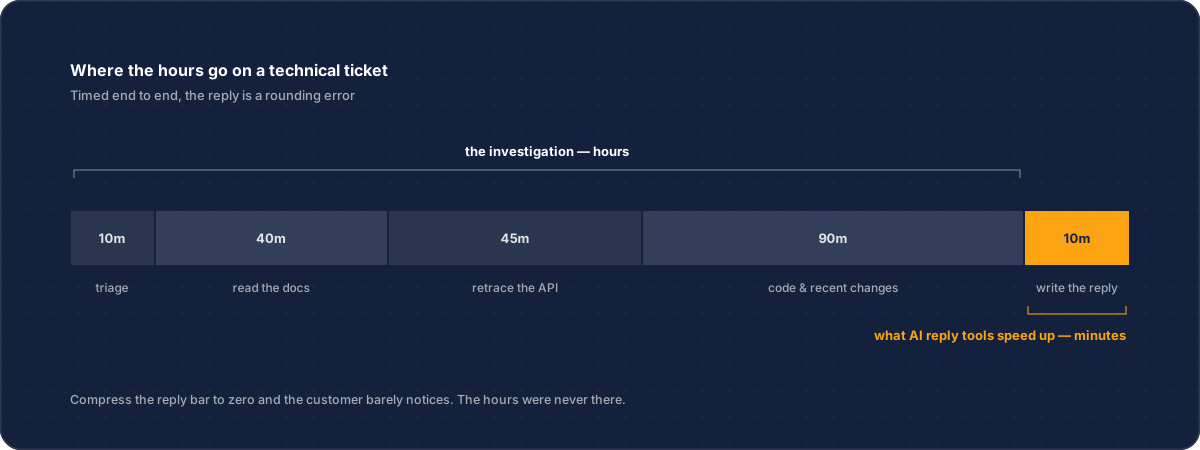
Writing is minutes. Knowing what to write is hours. An AI that drafts replies compresses the minutes and leaves the hours untouched.
Why the demos still look great
In transactional support the ratio flips. When most tickets are refunds and login resets, the "investigation" is a lookup and composing polite, on-brand responses all day is genuinely the grind. Drafting tools were born there, and there they shine.
The trouble starts when that success gets projected onto technical queues - as if a support ticket is a writing task with some looking-up attached, when for a technical product it's an investigation task with some writing at the end.
Fluent guessing
There's a sharper problem than wasted spend. A drafted reply that isn't grounded in an actual investigation is a guess - a guess with excellent grammar. And fluency reads as confidence: the polished draft looks like it knows what it's talking about, which makes it exactly the kind of wrong answer a busy or junior agent will ship.
Speed that up and you haven't reduced your error rate. You've increased its velocity.
The reply was never the slow part.
Measure time-to-root-cause
If you want to know whether an AI tool will actually move your numbers, ignore first-response time - canned anything improves that. Ask instead: what does this do to the time between "ticket opened" and "we know the actual cause"? That's the interval your customers experience as slow support, and drafting tools don't touch it.
Point the AI at the hours, not the minutes
The legwork in the long middle - read the docs, retrace the API, correlate against what shipped - is systematic, source-grounded work. That's what AI should be doing, and it's what Flocly does: the moment a ticket arrives, it investigates across your connected sources and proposes a root cause with the evidence behind it, so your agent starts from "do I agree?" instead of a blank page. The reply drafts itself at the end too - but by then it's the easy part, which is rather the point.
We've written up how the investigation pipeline works if you want the internals.
Before you buy an AI support tool, ask which half of the ticket it speeds up. See what investigation-first looks like.