Why technical support doesn't scale by hiring
More tickets, more agents - the arithmetic every support leader reaches for. In technical support it quietly fails: the bottleneck is diagnosis, not hands.
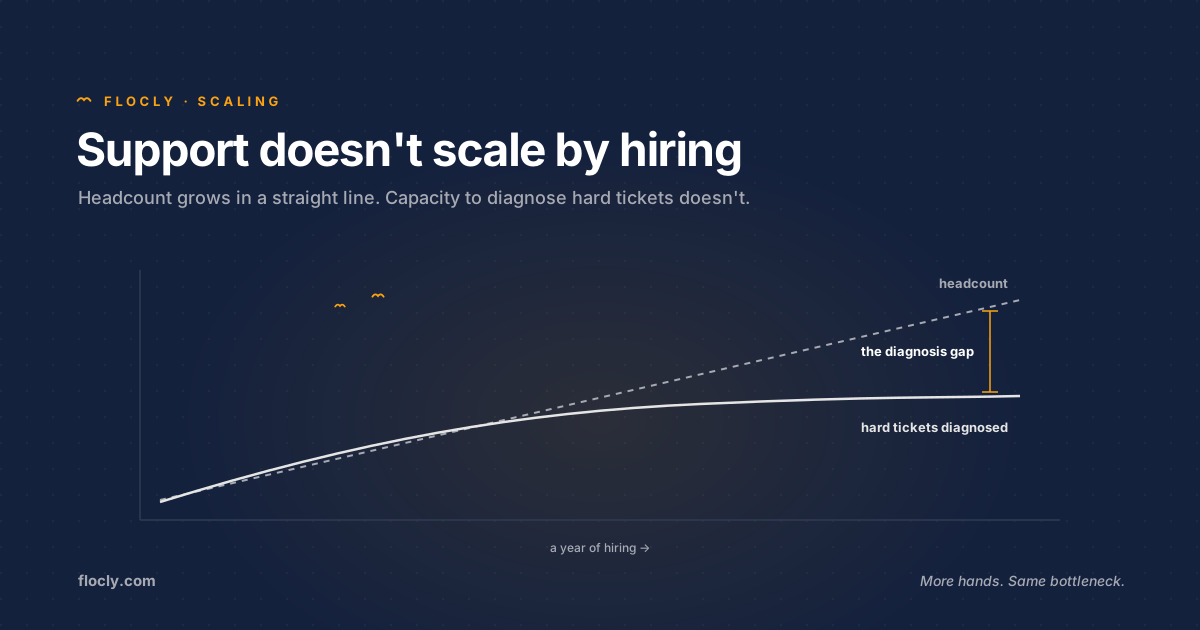
When a support queue starts slipping, the fix looks like arithmetic. Each agent handles N tickets a week; the queue grew 30%; hire 30% more agents. Budget approved, problem solved.
In transactional support - password resets, refunds, order status - that arithmetic mostly works, because one ticket is much like another and any trained agent can take the next one off the pile. In technical support it quietly fails, which is why so many teams find themselves running the same headcount conversation six months later with a bigger team and a bigger backlog.
Not all tickets cost the same
The queue for a technical product has a lopsided shape: most of the volume is routine, but most of the time is concentrated in a minority of diagnosis-heavy tickets. "How do I rotate this API key" costs minutes. "Why does the export return stale rows after a webhook replay, but only for workspaces created before March" costs an afternoon - usually a senior afternoon.
Hiring plans are built on the volume distribution. The costs live in the time distribution.
The new hire takes the wrong 60%
A new agent becomes productive on routine tickets within weeks, so tickets-per-head improves and the dashboard rewards the decision. But look at what actually moved: the new hire absorbed tickets that were already cheap. The diagnosis-heavy ones - the tickets that were burning your week - still route to the same three people they always routed to, because those are the only people who can answer them.
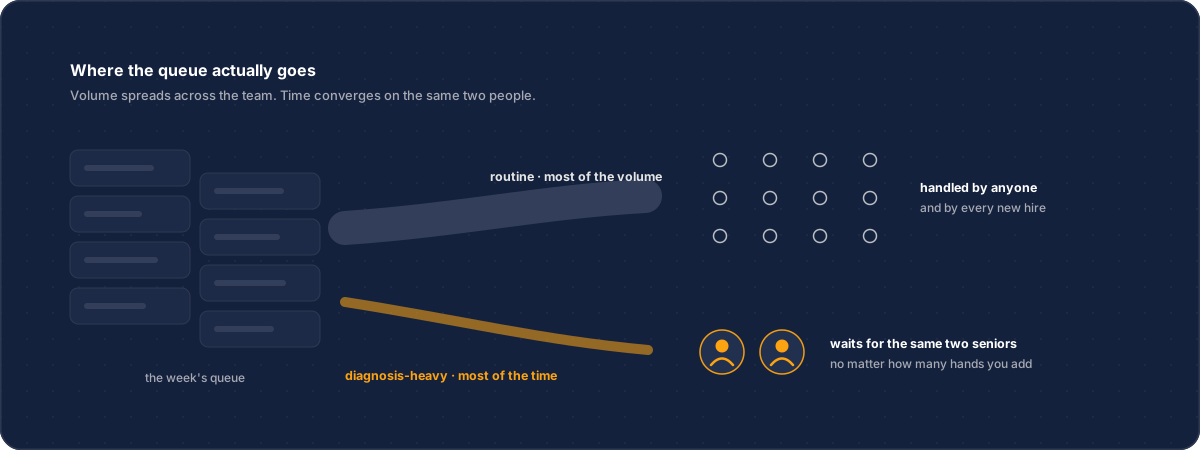
You added lanes to the motorway. The junction everyone queues at is unchanged.
Diagnosis doesn't parallelise
What makes a hard ticket hard is that the answer is spread across systems. The docs say what the product should do. The API says what it actually does. The commit history says why that changed on Tuesday. Diagnosing means holding all three in your head at once - and the people who can do that are carrying years of accumulated context you cannot hire in and cannot train in a month.
So the senior people become the escalation desk. Their calendar fills with other people's tickets; their project work dies by a thousand "quick questions." Ironically, each junior hire makes this slightly worse - more hands generating escalations, the same few heads absorbing them. And when one of those heads eventually burns out and leaves, the capacity you hired around walks out the door with them. (That failure mode is expensive enough to deserve its own post.)
Hiring adds hands. The bottleneck is diagnosis - and diagnosis doesn't parallelise by headcount.
What scales instead
If the constraint is diagnosis, the lever is the cost of a diagnosis - not the number of people queuing to perform one. Two things genuinely move it:
- Make each investigation cheaper. Most of a hard ticket is legwork - finding the right doc section, retracing the API's real behaviour, locating the change that caused it. Legwork is exactly the part that can be systematised.
- Make each investigation reusable. The second occurrence of a hard problem should cost minutes, not another senior afternoon.
This is the premise Flocly is built on. The moment a ticket arrives, Flocly investigates it across your docs, API references, and codebase, and proposes a root cause with the evidence behind it - so the senior review that used to take an afternoon of archaeology becomes "do I agree with this?" We've written about how the investigation works under the hood.
If your scaling plan is a hiring plan, it's a plan to buy the same bottleneck in a bigger size. See what Flocly does instead.